She had to admit, she’d shed more than just a tear that night and fallen onto her bed thoroughly exhausted. The bed itself was little more than a narrow camp bed, with a couple of army blankets to keep her warm, but it was a better condition to sleep in than those who slept on the floor on pallets who were at risk of being woken by rats that often found their way to the encampment. Though the relative few she saw, were nothing compared to the ones the soldiers themselves described in the trenches as being as 'fat as cats'.
She had drifted into a deep sleep of dreams of her homeland and family when she heard a soft female voice beckon her.
“Och, Adele, wake up. We’re expecting another few ambulances full of injured men. I’ve brought ye a cup of tea before they arrive.”
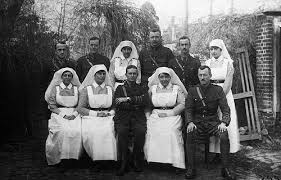
 For a moment, she thought she was still dreaming, until she opened her eyes and saw Morag, a young Scottish nurse from Dundee, holding out a tin mug of tea in her hand. Adele sat up and took it gratefully from her, it would be many more hours before she’d have the chance of another.
“Thanks so much, you’re very thoughtful.”
Morag smiled. Even in the dimly lit tent, where there were only a couple of lanterns lit, she could see the young woman’s dazzling smile. She was the sort of person who lit up a room with her presence, always positive, forever cheerful, an asset to be around.
Morag sat in a chair sipping her own tea, it would be hard work for her too later. Harder in some respects as she had to run hither and thither, looking for this and that for the medical team, whilst they only had to attend to the task-in-hand.
The nurses, though, sometimes did the doctors' jobs if they were not around and were well-experienced. She knew that herself from the time she’d spent as a nurse back in Merthyr. The ward sister there could diagnose as well as any of the doctors, and more often than not, was correct with her diagnoses.
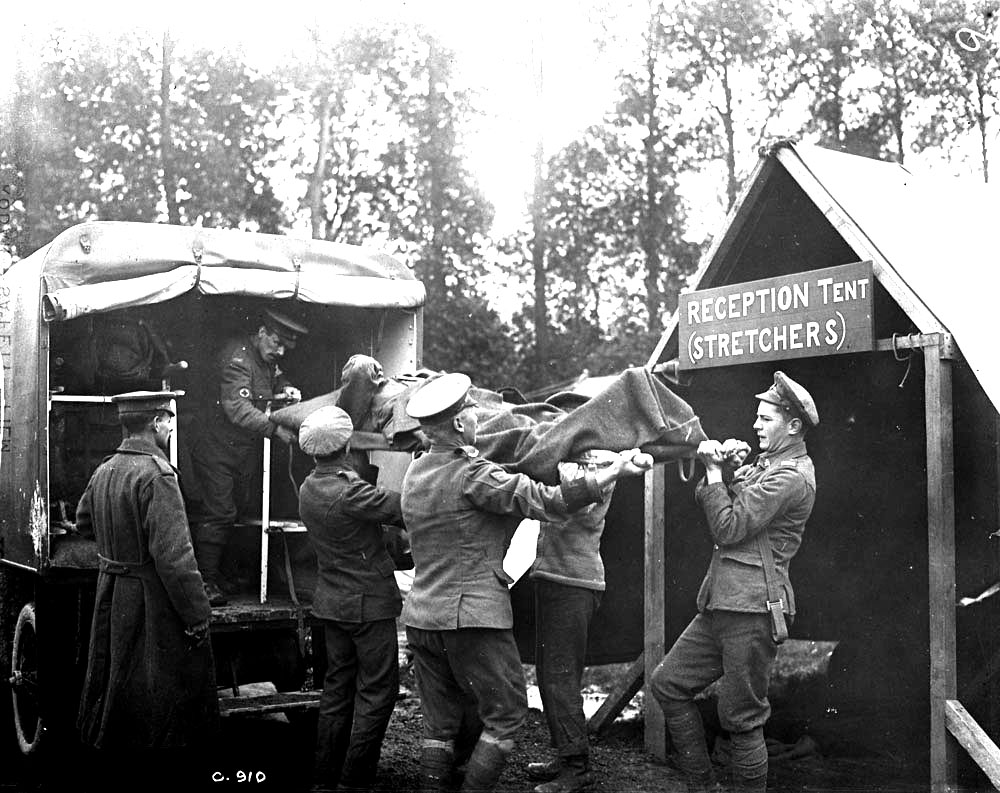
At first light, the ambulances arrived and the stretcher bearers brought in the casualties to the clearing station. Adele had had hardly any time to draw a breath for the first half hour or so, the large tent was in chaos as the injured were sorted into those requiring immediate surgery and those that could afford to wait. All the other casualties were in another tent. Some could wait, others were already dead by the time of arrival or else on the brink. Often Adele heard one or another of the men cry out with delirium, their limbs shivering, lips trembling. Shell shock, they called it. Some of the poor men would never be the same again. Fortunately, for some, with the right help, support and guidance, they became physically whole again, though they’d never forget the mental anguish, ever.
Worst of all were the firing squads—who on the command of a senior officer would shoot a deserting soldier, as they brought shame on the army and could prove a security risk if they fell into enemy hands. Adele often wondered if those poor men were just shell-shocked and refusing to take any more, their bodies shutting down, their need to escape, their only outlet from a hell on earth. Life in the trenches was arduous. Often they were stuck in inches of wet muck with no means of washing, changing or drying their clothing. Although they were told to change into clean socks and dry their feet, it didn’t always happen that way and as a result, many soldiers developed something known as ‘trench foot’, a painful condition. The constant mud and rain had exacerbated the condition for many. Often the foot would crack and change colour, then swell up as blood vessels and nerves were damaged in the process. If untreated, then gangrene could set in resulting in amputation to save the soldier’s life. One soldier arrived at the clearing station and his toes fell away when his socks were removed, the stench being unbearable. Adele had to inform him that his limbs had to be removed as soon as possible.
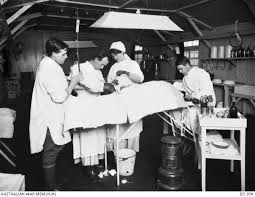
 The sounds and smells they endured as they worked at the encampment was like nothing she’d ever witnessed before. Here, there wasn’t much cleaning up of areas, like at the hospital. It was very rough and ready, often a quick sweep and mop of the floor were all they had time for. No time to disinfect operating tables as time was of the essence, a delay could mean the difference between life and death. Often wounds were already infected from mud and manure from the fields, the medical staff were really up against it.
One young man lay on a gurney whimpering in the corner of the tent. There was no time to attend to him. Adele wished she could split herself in two, realising that a lot of her decisions meant the difference between life or death. She was in the midst of suturing a wound when the young lad cried out, “Mam! Where are you?”
Morag left the operating table as Adele was able to manage alone for a while. She knelt beside the gurney and took the lad’s hand. He wanted and needed his mother, but she was in a distant land. Adele watched Morag stroke the soldier's head and softly kiss his cheek. A smile appeared on his face, he held out his arms as if he was embracing someone, and then he was gone, in the belief his mother was him. If there’d have been time, Adele would have wept, but there were many more casualties to attend to and she just didn’t have the time to spare. No time to ponder her decision on whether she’d have saved the lad if she’d operated on him first. Only God knew the answer to that.
Adele didn’t have the time either to dwell on her dry mouth, aching back and limbs, and her growling stomach. Something spurred her on, propelling her to get through the day’s work. James Bellingham was beginning to leave more and more cases in her capable hands to work at another hospital over the Belgian border in Northern France. That one was in a large château that had been taken over for the war effort. The men were transported there by ambulance and even trucks after their operations. If then found to be chronically unwell, they were shipped back to Britain, where special hospitals were set up to deal with the aftermath of burns, amputations and shell shock.
At that time, there was also pioneering plastic surgery being carried out at various British hospitals. Some of the men had received horrific burns to their faces and other parts of their bodies, making them barely recognisable to their families and friends.
The first time James had left her alone with the nursing team, she had trembled from top-to-toe, but a professionalism had taken over, along with a comforting word from Morag. After a couple of minutes of adrenaline coursing through her veins, she had calmed down, realising she was doing the best she could under the circumstances. James, who checked out her work when the casualties arrived at the hospital, informed her he was very pleased with her work indeed, which gave Adele an immense feeling of satisfaction.
It wasn't planned that she would head a surgical team but there was little choice as one of the senior surgeons had fallen ill, so it was either in at the deep end or let the men die. There was no other choice.
Apart from a quick cup of tea and a small corned beef sandwich, it was 4.30 p.m. before Adele got to go off duty, when another surgeon, who had rested most of the day, took over for another long shift.
The cost of this war was high and seemed totally futile to Adele.

Red Poppies is now available in Kindle format on Amazon!